
Bridge underpass maintenance is no easy task—it’s entirely suspended work, with either a road or a river below. Choosing the wrong scaffolding poses a significant safety risk. Many construction teams struggle with this: which type of scaffolding is most reliable for this “suspended in mid-air” work? The answer is clear: the safest is “bridge-specific suspended scaffolding,” commonly known as “suspended scaffolding.” Today, we’ll explain in layman’s terms why suspended scaffolding is the “safety champion” for bridge underpass maintenance, and why unsuitable scaffolding fails.How to Erect Scaffolding Inside Confined Historical Buildings
Let’s start with the familiar “ground-mounted scaffolding,” the kind that rises directly from the ground. This works well in low-rise buildings, but it’s completely unsuitable for bridge underpasses. First, there’s nowhere to set up scaffolding. The area under bridges is either empty or has vehicles and pedestrians passing through, making it impossible to extend scaffolding from the ground to the underside. Even on low bridges, it’s unsafe because work under the bridge involves suspended loads, and the support of a ground-mounted scaffold is insufficient; even slight swaying could lead to a major accident. Therefore, ground-mounted scaffolding is basically a “discarded option” for bridge maintenance.Which type of scaffolding is most reliable for high-rise building exterior wall construction?
Next, let’s talk about “cantilevered scaffolding,” which is the type erected by extending steel beams from a building. This works on the exterior walls of high-rise buildings, but it has serious drawbacks on bridges. The structure of a bridge is different from that of a building. There’s no suitable place to fix the steel beams; forcibly drilling holes for fixing would damage the bridge structure, making it more vulnerable. Furthermore, the stress points of cantilevered scaffolding are too concentrated. The large work area under the bridge requires multiple sets of steel beams for support, which is costly and unsafe. In strong winds, the cantilevered sections are prone to swaying, which is worrying to watch.Price Negotiation Techniques for Scaffolding Safety Regulations Across Countries
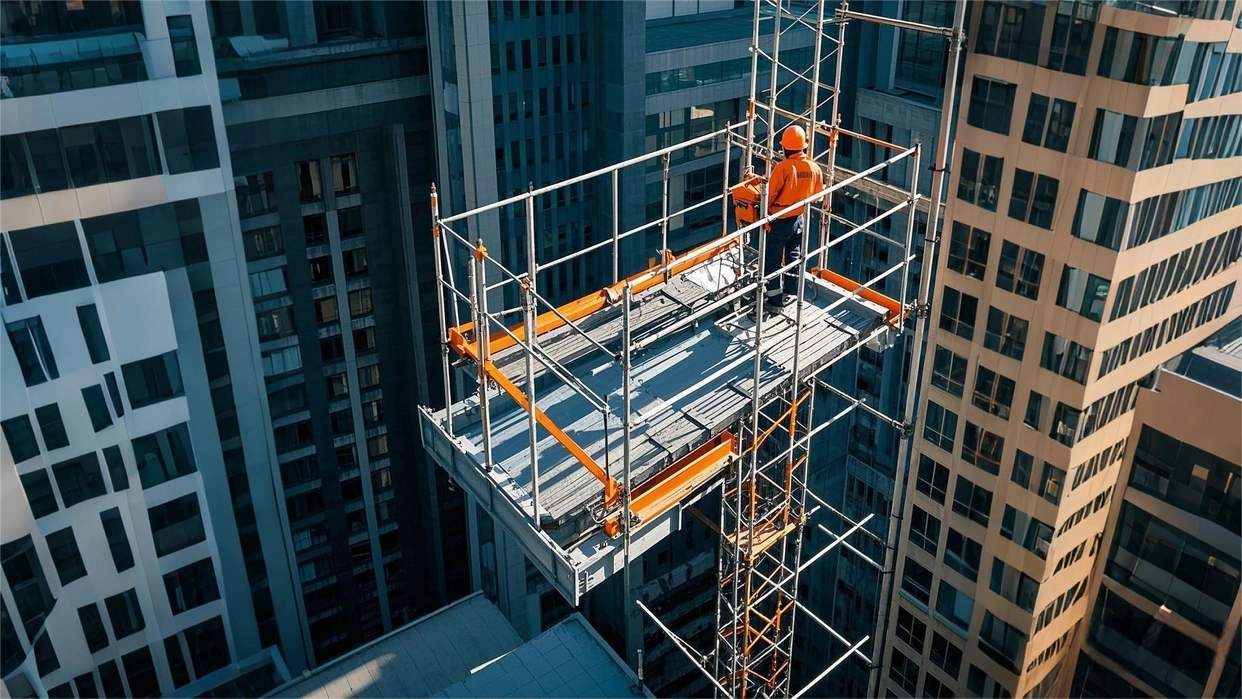
Finally, let’s focus on “bridge-specific suspended scaffolding”—why can it be considered a “safety champion”? First, the fixing method is reliable. It doesn’t rely on ground support or damage the bridge’s main structure. Instead, it uses specialized clamps to firmly “hang” onto the guardrails on both sides of the bridge or the pre-existing load-bearing structure at the bottom, like putting a “suspended protective suit” on the bridge. This suspension method distributes the force evenly, and each suspension point has double insurance; even if one point fails, there’s a backup device, maximizing safety.
Second, the protection is comprehensive, eliminating worries about accidents. The suspended frame is surrounded by enclosed safety netting, and the bottom has anti-slip footboards, allowing workers to work as if on flat ground, without fear of falling. Furthermore, the frame is equipped with fall arrestors and emergency ladders, ensuring safe evacuation in case of emergencies. Compared to other scaffolding, the suspended frame’s enclosure and protection are designed for high-altitude, suspended operations, perfectly suited to the conditions at the bottom of bridges.
Finally, it’s flexible and doesn’t cause delays. The length of the suspension frame can be adjusted according to the scope of maintenance. You can move the frame to whichever section needs repair, eliminating the need for a complete system. Furthermore, being suspended, it doesn’t occupy space under the bridge, doesn’t obstruct vehicle or pedestrian traffic, and won’t damage the surrounding greenery or waterways. For long-distance bridge maintenance, multiple suspension frames can be linked together to form a continuous work platform, greatly increasing efficiency.
However, there are a few details to keep in mind when using suspension frames, with safety being paramount. First, always choose specialized products from reputable manufacturers with valid certificates. Don’t use ordinary suspension devices as a substitute; bridge maintenance cannot be compromised. Second, carefully check the suspension points during installation, ensuring the clamps are tightened securely. Double-check before starting work each day to ensure nothing is loose. Third, never work on the scaffolding during strong winds, heavy rain, or dense fog; wait until the weather has completely cleared before resuming work.
Some might ask, are there other options? For example, a suspended platform. Suspended platforms are suitable for small-area, localized repairs, such as patching a crack or painting, but they are unsuitable for large-area maintenance. A suspended platform can only accommodate 1-2 people at a time, has a small working area, and poor wind resistance. The open space under bridges and strong winds make suspended platforms prone to swaying, posing a much higher safety risk than suspended scaffolding. Therefore, considering safety, efficiency, and adaptability, suspended scaffolding is the preferred choice for bridge under-base maintenance.