
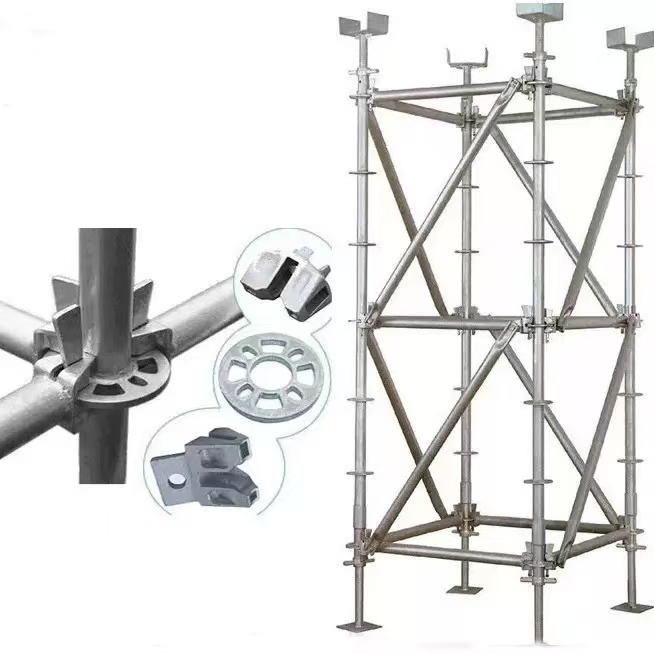
In commercial building construction projects, the method of acquiring scaffolding (purchase or rental) directly impacts the overall project cost planning. The cost-effectiveness of either method is not absolutely superior; it depends primarily on the project duration, frequency of use, scale, and available funds. Purchasing scaffolding requires a higher initial investment, but long-term reuse is more economical; renting scaffolding has lower initial costs, reducing financial pressure and making it suitable for short-term projects. Accurate calculation of the cost structure and applicable scenarios for both methods is crucial for optimal project cost control.How to Choose a Scaffolding System for Commercial Building Projects?
First, let’s clarify the core cost components of each method. The cost of purchasing scaffolding includes direct procurement costs (component and accessory costs), hidden costs (transportation fees, warehousing fees, maintenance fees, depreciation and loss fees), and capital tied up. Taking common modular scaffolding as an example, the procurement cost of 1 ton of components is approximately 8,000-10,000 yuan. Adding transportation, warehousing, and annual maintenance costs, the cost per use decreases with each reuse. The cost of renting scaffolding is mainly based on phased rental fees (charged daily/monthly, with an average daily rental of approximately 1.5-2 yuan/ton for modular scaffolding). Additional costs may include transportation and erection/dismantling fees, but there are no maintenance or depreciation costs, resulting in minimal capital tie-up.Chinese-made scaffolding exported to Europe
For short-term commercial building projects (construction period ≤ 6 months), renting scaffolding is more cost-effective. These projects have short usage cycles, and the high upfront investment in purchasing scaffolding cannot be amortized through reuse. Furthermore, storage and idle depreciation costs must be incurred after the project ends. For example, renting 100 tons of modular scaffolding for 6 months costs approximately 27,000-36,000 yuan, plus transportation and erection fees, bringing the total cost to approximately 40,000-50,000 yuan. Purchasing, on the other hand, would cost 800,000-1,000,000 yuan just for procurement, and subsequent idleness would result in capital loss. Clearly, renting is more economical. In addition, if a short-term project requires structural adjustments and a change in scaffolding type, renting allows for flexible replacement, avoiding the waste of unusable purchased scaffolding.For purchases, please add the following WhatsApp contact.
For long-term or multi-project reuse scenarios (construction period ≥ 1 year, more than 2 similar projects per year), purchasing scaffolding is more cost-effective. In long-term projects, the purchase cost can be gradually amortized over the long usage period. Taking 100-ton disc-lock scaffolding as an example, the rental cost for one year is approximately 54,000-72,000 yuan, while for two years it reaches 108,000-144,000 yuan. The total purchase cost (including procurement, maintenance, and depreciation), spread over two years, averages approximately 150,000-200,000 yuan per year, with the average annual cost decreasing as the usage period continues. For construction companies that regularly undertake commercial building projects, purchased scaffolding can be reused across different projects and can be customized and allocated according to project needs, improving construction efficiency while avoiding rental price increases or shortages due to market supply and demand.
In summary, the core of choosing between purchasing and leasing scaffolding is “cycle and reuse rate”: leasing is preferable for short-term, single-project use, offering greater flexibility and cost reduction; purchasing is preferable for long-term, multi-project reuse, with more economical long-term amortization. In addition, financial resources must be considered—those with ample funds and a focus on long-term benefits can choose to purchase; those with limited funds and a focus on short-term cash flow stability should prioritize leasing. Construction companies can make precise decisions based on the specific project schedule, financial strength, and business plans to achieve optimal cost and maximum efficiency in scaffolding use.