
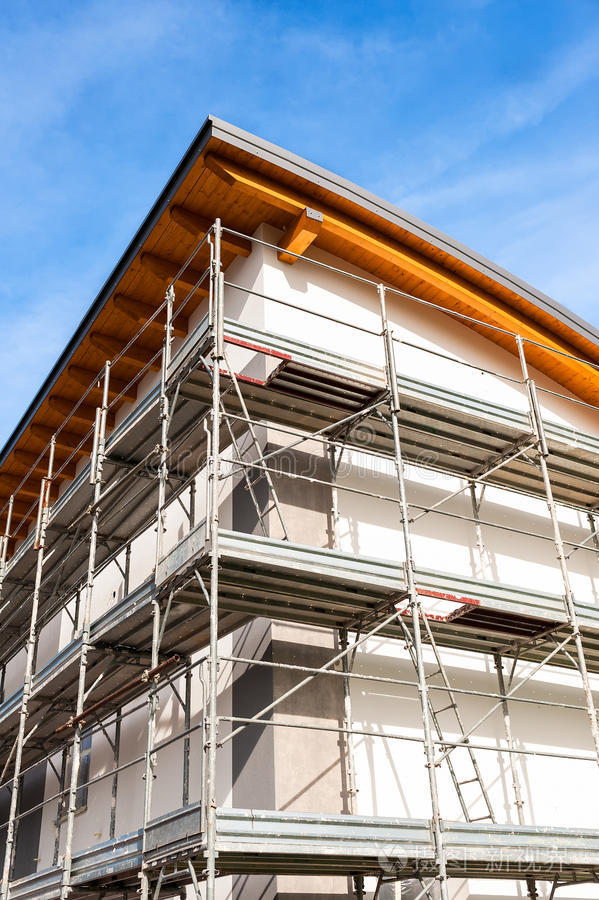
Working on overseas construction sites, scaffolding is like a “high-altitude foothold” for workers; its safety is directly related to everyone’s lives. Many construction accidents are caused by the failure to conduct routine inspections, allowing problematic scaffolding to be put into operation. Actually, it doesn’t take much effort; simply performing daily and weekly inspections can greatly reduce risks. Today, we’ll explain in simple terms what to check and how to conduct these two types of inspections.What Risks and Inspection Points Should Be Noted When Purchasing Used Scaffolding?
First, let’s talk about daily inspections, like a “morning check” for workers before work. It’s simple but crucial and can be done in about 10 minutes before starting work each day. First, check the planks. See if they are loose, broken, or covered with oil, water, or debris—all of which can easily cause slips. If it rained or snowed the day before, pay special attention to whether the planks are icy. If so, clean them immediately and lay down some anti-slip mats.Long-Term Cost Comparison of Hot-Dip Galvanized Scaffolding and Traditional Painted Scaffolding
Second, check the railings and safety nets. Handrails are workers’ “lifesaving handrails” and must be firmly secured, not wobbling, and at least waist-high; otherwise, they will not provide protection. Safety nets must be stretched flat, without holes or tears, and the connections between the netting and the scaffolding must be tight. Additionally, check the scaffolding for protruding nails or sharp metal edges; these small details can easily injure workers.Which type of scaffolding is most reliable for high-rise building exterior wall construction?
Finally, check the connecting components. Scaffolding is assembled with bolts and clips; check several key bolt locations daily for looseness, and tighten them immediately if found. Also, be aware of any unauthorized removal of scaffolding parts, such as removing a handrail for easier access; stop this immediately and reinstall the parts.
The weekly inspection is a more comprehensive “in-depth checkup” and should be conducted by a designated person, preferably an experienced safety officer. First, check the overall stability of the scaffolding, looking for any tilting or deformation, and whether the bottom support legs have sunk into the ground—especially after rain or snow, when the ground is soft and prone to problems. The connection points between the scaffolding and the building walls must also be checked. These “fixed anchor points” must be secure and not loose.
Next, check the load-bearing components. The uprights and horizontal bars of the scaffolding are the main load-bearing structures. Carefully inspect them for bending, cracks, or severe rust. If any bar is found to be bent, even slightly, it must be replaced immediately. Additionally, check that the materials piled on the scaffolding are not excessive. For example, piling excessively heavy steel bars or cement on top can easily overload the scaffolding.
The integrity of safety protection facilities must also be checked. In addition to the daily checks of railings and safety nets, ladders and ramps used for ascending and descending the scaffolding should be checked weekly to ensure they are unobstructed, secure, and free of obstructions. If there are electrical wires near the scaffolding, check that the distance between them is safe to avoid electric shock accidents.
A small reminder: whether it’s daily or weekly inspections, keep a record. Construction standards in many overseas countries require that after an inspection, a note be written stating “No problem” or “Problem found, rectified,” and the inspection must be signed for confirmation. This way, in case of any problems, it’s clear who inspected the scaffolding and when. If serious problems are found, such as visibly tilted scaffolding or extensive damage to the safety netting, use must be stopped immediately, warning tapes must be put up, and work can only resume after the issues are rectified.
For example, on construction sites in California, USA, the foreman, along with the safety officer, conducts a daily inspection before work begins each day, addressing minor issues on the spot. Every Friday afternoon, a comprehensive inspection is organized to address any minor hazards accumulated throughout the week. Because of these rigorous routine inspections, the accident rate on scaffolding at local construction sites remains very low.