
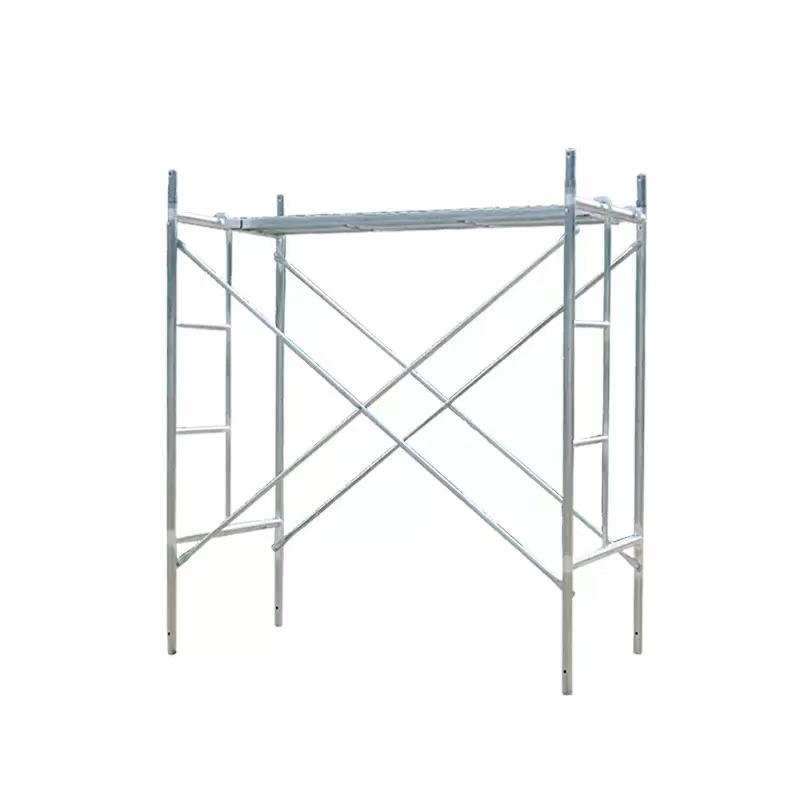
Scaffolding is a core support facility for commercial building construction, directly impacting construction safety, efficiency, and cost. Commercial buildings often feature high ceilings, complex structures, tight construction schedules, and high foot traffic. Choosing the right scaffolding system requires comprehensive consideration of multiple factors, including project scale, building structure, construction needs, and safety regulations. Blindly selecting a system can not only create safety hazards but also increase construction costs and delay the project. Accurately matching the system to the project’s core needs is the optimal solution.Scaffolding Purchase vs. Rental
First, clarify the core selection prerequisite: compliance with safety regulations and load requirements. Commercial building construction loads typically include personnel, tools, and materials. Scaffolding must meet the national “Unified Technical Standard for Safety of Construction Scaffolding,” ensuring that the load-bearing capacity of components such as uprights and horizontal bars meets the standards. For high-rise buildings (height > 24m) or heavy-load construction scenarios, heavy-duty scaffolding with a load-bearing capacity ≥ 2.5kN/m² should be selected; for light-load operations such as plastering and painting, medium-duty scaffolding with a load-bearing capacity of 1.5kN/m² can be used. Simultaneously, scaffolding with production qualifications and product certificates must be selected, and the use of non-standard components should be avoided.Chinese-made scaffolding exported to Europe
The type of scaffolding should be matched according to the building structure and construction scenario. For frame structure commercial buildings (such as office buildings and shopping malls), with open spaces and large spans, cup-lock scaffolding is preferred due to its good self-locking joints, high erection efficiency, and strong load-bearing capacity, making it suitable for large-area, high-intensity construction. For steel structure commercial buildings (such as steel structure exhibition halls), where frequent adjustments to scaffolding positions are required, disc-lock scaffolding is convenient to assemble and disassemble, highly versatile, and has a neat appearance, making it suitable for construction in conjunction with steel structures and adaptable to complex joint operations. If the project involves high-altitude operations such as facade renovation or glass curtain wall installation, attached lifting scaffolding is more advantageous. It can rise with the floor, eliminating the need for repeated erection and dismantling, saving materials and labor, and does not occupy ground space, making it suitable for small downtown commercial projects.
For purchases, please add the following WhatsApp contact.
Consider both construction efficiency and cost comprehensively. Commercial building projects typically have strict time constraints. Newer types of scaffolding, such as cup-lock and disc-lock scaffolding, are over 30% more efficient than traditional coupler-type scaffolding, significantly shortening the construction period, but initial procurement costs are higher. If the project budget is limited, the construction period is flexible, and the work scenario is simple, traditional coupler-type scaffolding offers better value. Furthermore, site conditions must be considered: for city center commercial projects with limited space, attached lifting scaffolding or cantilevered scaffolding are preferred to minimize ground occupation; for large suburban commercial complexes with ample space, ground-mounted cup-lock or disc-lock scaffolding can be used to reduce erection difficulty. Additionally, long-term maintenance costs must be considered; disc-lock scaffolding components are corrosion-resistant and have a long service life, making them more economical in the long run.
In summary, the core principles for selecting scaffolding for commercial building projects are “safety and suitability, high efficiency and economy”: choose cup-lock or disc-lock scaffolding for high-rise buildings and heavy-duty construction; choose disc-lock scaffolding for steel structures and complex node operations; choose attached lifting scaffolding for high-altitude operations and limited space; and choose coupler-type scaffolding for limited budgets and simple scenarios. When selecting a scaffolding system, safety regulations, building structure, construction requirements, and costs must be considered. Consulting with professional technicians to develop a customized solution may be necessary. A suitable scaffolding system not only ensures construction safety but also improves construction efficiency and controls costs, laying a solid foundation for the smooth progress of commercial building projects.