
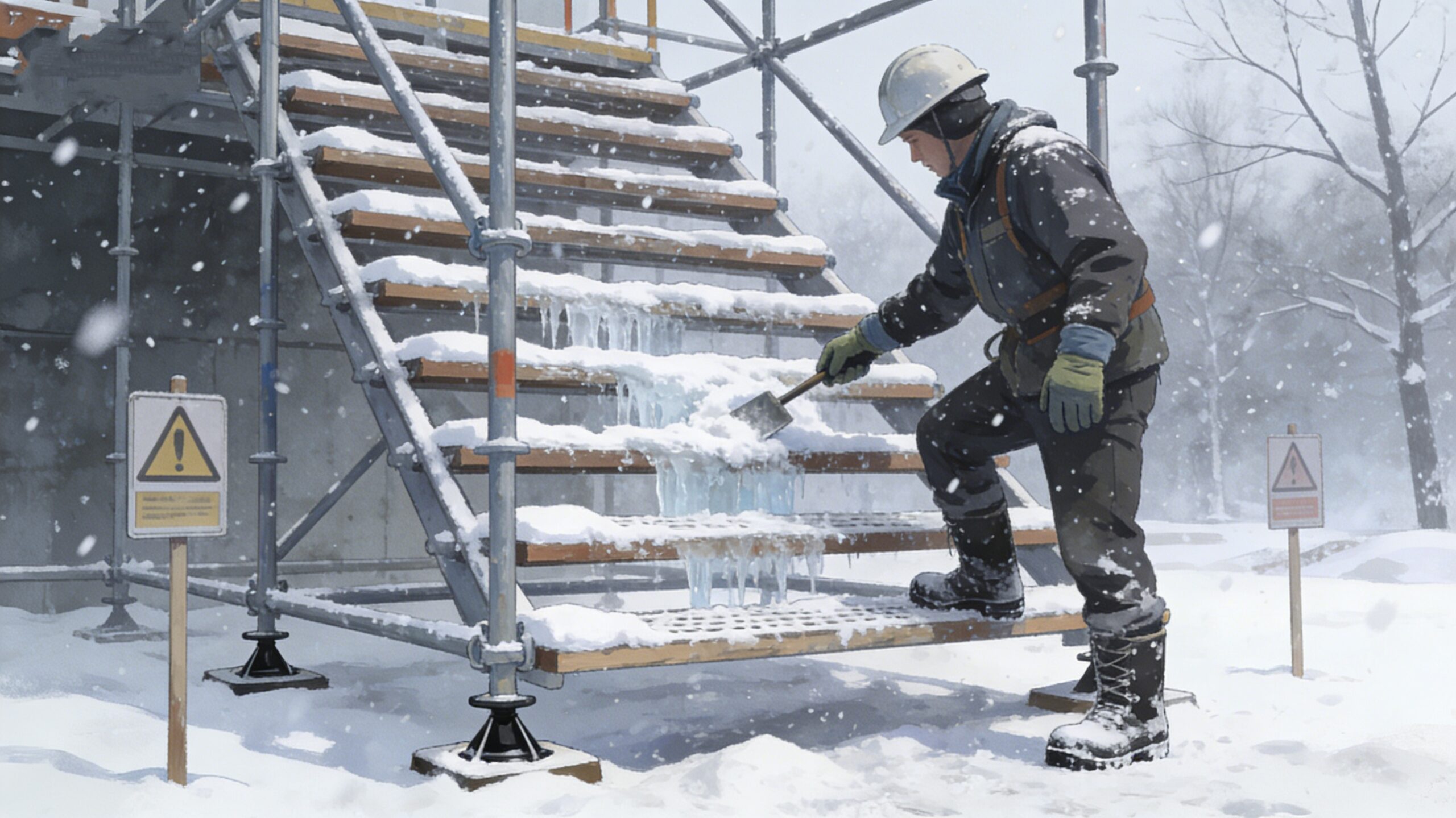
In cold, snowy areas, are extra safety measures necessary when erecting scaffolding? The answer is a resounding yes! In winter, with its cold and snowy conditions, scaffolding becomes incredibly delicate. Without extra protection, safety issues are easily caused, and workers feel uneasy.How to Prevent Theft or Damage to Scaffolding Materials
Let’s start with the most troublesome problem in snowy weather—slippery surfaces. Snow melts and then refreezes on scaffolding planks, forming a layer of ice. Stepping on it is like walking on a slide; a slight misstep can lead to a fall. Therefore, extra anti-slip measures are essential, such as laying anti-slip mats on the planks or tying thick ropes to increase friction and provide a stable foothold.5 Golden Rules for Scaffold SafetyHow to Erect Scaffolding Inside Confined Historical Buildings
Besides anti-slip measures, the scaffolding itself also needs to be protected against freezing. In low temperatures, the steel pipes and screws of the scaffolding become more brittle than usual. Like a carrot in winter, it breaks easily with the slightest touch. Without inspection, using brittle, frozen parts can cause scaffolding to suddenly deform or even collapse. Therefore, it’s crucial to carefully inspect it before each use and replace any faulty parts immediately.How to Inspect Scaffold Safety After Severe Weather
Snow accumulation is also a major problem. Deep snow piles up on the scaffolding’s crossbars and planks, becoming increasingly heavy. Over time, the scaffolding may collapse under the weight. This necessitates timely snow removal; waiting until the snow is too thick is both laborious and dangerous. When clearing snow, personal safety must be prioritized; avoid shoveling from elevated positions.
Workers must also take necessary precautions; this is a critical safety measure. In winter, frozen hands make it difficult to grip, and numb feet make it difficult to stand. Therefore, warm, non-slip shoes and thick gloves are essential. Wearing a reflective vest is also highly recommended, as visibility is poor in snowy conditions, allowing others to see you clearly and preventing collisions.
Furthermore, wind is a significant issue, especially in cold regions where winter winds are particularly strong. When the wind blows, the scaffolding sways back and forth like a swing, which is terrifying to stand on. Therefore, the scaffolding must be securely fastened, for example, by installing multiple ground anchors to firmly fix the scaffolding to the ground and prevent it from swaying in the wind.
Some people might be lazy and think, “I didn’t do these extra things before, and nothing happened.” Don’t believe that. Winter weather is unpredictable; one day it might be fine, and the next day it could snow heavily or the temperature might drop. Safety is paramount; it’s better to be safe than sorry. Taking extra precautions reduces the risk.
Furthermore, visibility is poor in snowy weather, so clear warning signs must be placed around the scaffolding to warn others not to approach. If work is to be done at night, sufficiently bright lights must be installed to clearly illuminate the area around the scaffolding and prevent accidents caused by poor visibility.
In short, in cold, snowy regions, no extra safety measures can be omitted when using scaffolding. Anti-slip, anti-freeze, snow removal, and strong anchoring, plus worker safety measures—everything must be done properly. After all, the purpose of work is to earn money, not to take risks; safety is the most important thing, right?