
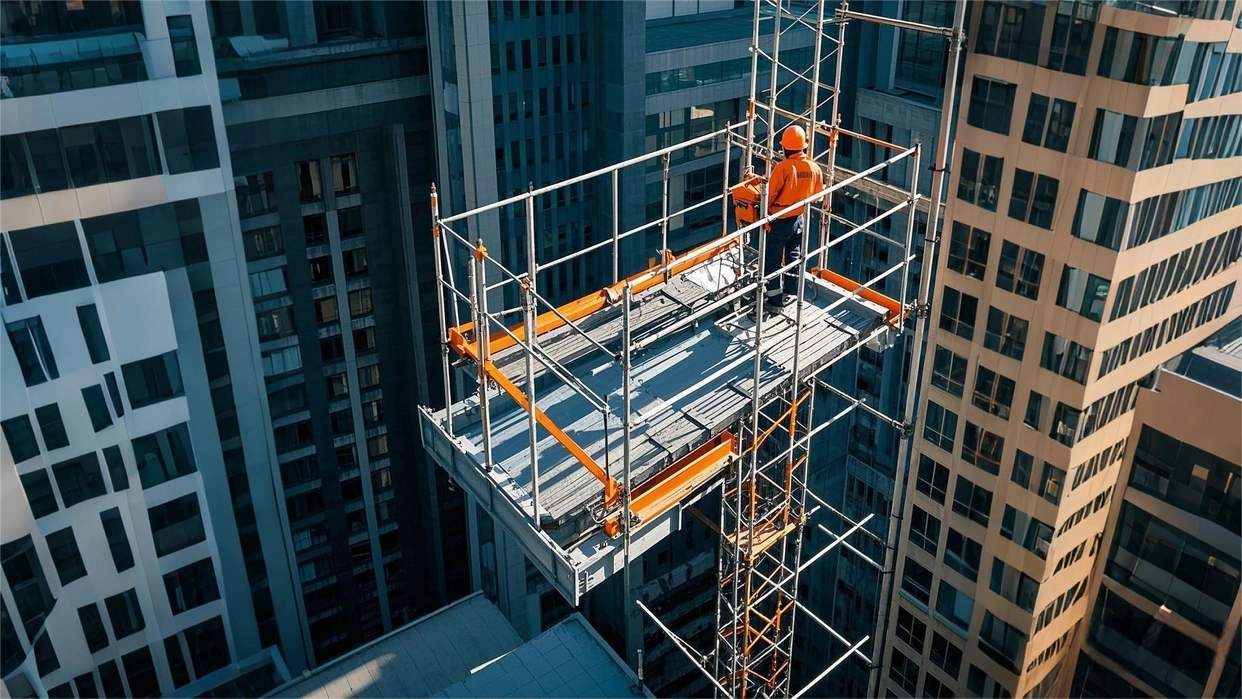
Working on overseas construction sites, stepping on scaffolding often results in a swaying motion and occasional creaking noises, which can be alarming. This is not a minor issue; ignoring it could lead to a major accident. Many workers think “a little swaying and noise is normal,” but this is actually the scaffolding crying for help—a warning that something is wrong. Today, we’ll explain the possible causes and solutions in layman’s terms.How to Conduct Daily and Weekly Routine Safety Inspections of Scaffolding
The most common cause is loose connections. Scaffolding is assembled piece by piece using bolts and clips, much like building blocks needing to be secured. If these parts are loose, the scaffolding will naturally wobble. For example, if workers didn’t tighten the bolts during installation, or if bolts have become loose due to vibrations over time, stepping on it will cause it to wobble and make a creaking sound from the friction of the parts. The solution is simple: stop work first, then check each bolt and clip around the wobbling area one by one. Tighten any loose ones with a wrench. If you find a broken clip or a stripped bolt, don’t make do; replace it with a new one. These small parts are essential.Do Scaffolding Use Requires Extra Safety Measures in Cold, Snowy Regions?
Secondly, the foundation may not be level or properly secured. The bottom support legs of the scaffolding are like a person’s feet; if they step on uneven ground or aren’t firmly supported, they will easily wobble. For example, if the ground is uneven and the support legs aren’t leveled with wooden planks or steel plates, or if the ground is soft soil and the support legs sink in, the uneven weight distribution will cause the scaffolding to wobble. In this case, first clear away any excess material from the scaffolding to reduce weight, then place thick wooden planks or steel plates under the support legs to level any uneven areas. If the ground is too soft, you can add a layer of gravel to compact it, making the support legs more stable.Which type of scaffolding is safest for bridge underpass maintenance?
Another possibility is that the scaffolding is erected too high and insufficient fasteners are installed. The higher the scaffolding, the more easily it sways in the wind. If the scaffolding isn’t properly secured to the building walls, the swaying will be more pronounced, potentially even producing metallic clanging sounds. The solution is to add additional fasteners, installing sufficient tie rods between the scaffolding and the wall to firmly secure it. Many overseas construction standards require a layer of tie rods every 3 to 4 meters of height; don’t skip this step to save time.
Overloading can also cause scaffolding to sway and make unusual noises. For example, piling too much steel or cement on the scaffolding, or having several people working crammed together, will cause the scaffolding to deform and sway under the weight, possibly producing creaking sounds from bent members. In such cases, work must be stopped immediately, excess materials removed, and the number of people on the scaffolding reduced to a safe weight-bearing range. Remember, scaffolding is not a “garbage heap”; there are clear regulations on how much material can be placed on each layer and how many people can stand on it. Don’t be greedy and overload it.
Additionally, damaged parts or scaffolding deformation can also cause problems. For example, if the uprights or horizontal bars of the scaffolding are bent, or if the safety netting or railings are broken, the stress will be uneven, causing the scaffolding to wobble when stepped on. Some parts may also make unusual noises due to severe rust and brittleness. The solution is to first identify the damaged or deformed parts, such as bent horizontal bars or rusted clips, and then remove them and replace them with new ones. If the scaffolding is severely deformed and the entire section is beyond repair, it should be dismantled and re-erected; don’t try to “make do” with the existing structure.
Another easily overlooked reason is environmental influence. For example, in windy weather, the scaffolding will sway and even make noise; if it has rained a few days ago, the ground will be soft, and the supporting legs will sink, causing the scaffolding to wobble. In severe weather such as strong winds or heavy rain, don’t force construction; stop work and wait for the weather to improve before inspecting and making corrections. After rain, pay special attention to checking whether the supporting legs have sunk and level them again if necessary.
Here’s an example from overseas: At a construction site in Australia, workers noticed the scaffolding was swaying and immediately stopped work to inspect it. They discovered that the bottom support legs weren’t level and two tie rods were missing. They first removed the materials from the scaffolding, leveled the support legs with steel plates, installed the replacement tie rods, and only resumed work after a thorough inspection confirmed everything was in order. If the problem hadn’t been addressed promptly, the consequences could