
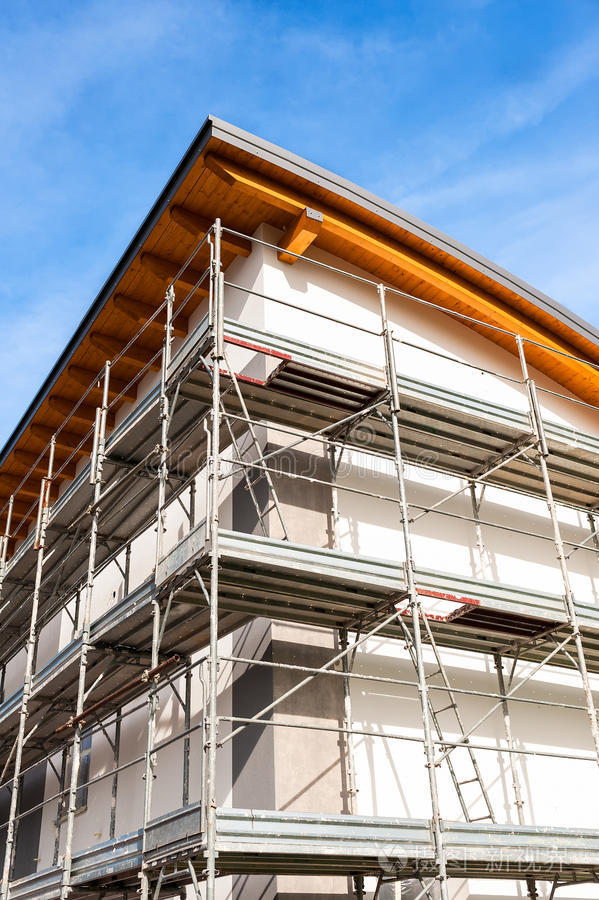
Choosing scaffolding for high-rise building exterior wall construction is like choosing a partner—the wrong choice leads to exhaustion and danger; the right choice brings peace of mind and high efficiency. Many construction teams struggle with this: what type of scaffolding should be used for exterior wall work on dozens of stories high? The answer is clear: the most suitable is “attached lifting scaffolding,” commonly known as “climbing scaffolding.” Today, we’ll explain in simple terms why climbing scaffolding is the “best partner” for high-rise exterior wall construction, and why other types of scaffolding are less suitable.How to Erect Scaffolding Inside Confined Historical Buildings
Let’s start with the most familiar type: “ground-mounted scaffolding,” which is erected from the ground all the way to the roof. This type of scaffolding is commonly used in low-rise buildings, but it’s ineffective for high-rises. First, it’s incredibly wasteful of materials. For dozens of stories, steel pipes and fasteners would be piled up like mountains, astronomical costs. Second, it’s unsafe. The higher the scaffold, the weaker its wind resistance; even a slight gust of wind can cause it to sway precariously, a worrying sight. Third, it’s inefficient. Building one floor at a time means delaying subsequent work by the time the roof is reached. Therefore, ground-mounted scaffolding is rarely chosen for high-rise exterior wall construction.Price Negotiation Techniques for Scaffolding Safety Regulations Across Countries
Next, let’s talk about “cantilevered scaffolding,” which involves extending steel beams from the building every few floors and then erecting scaffolding on top of them. This is slightly more economical than ground-mounted scaffolding, but it still has significant drawbacks. It requires drilling holes in the building structure to secure the beams, which can easily damage the building structure and require later repairs. Furthermore, it needs to be dismantled and rebuilt every so often, leading to repeated disruptions and low efficiency. In super high-rise buildings, the safety risks of this type of scaffolding also increase, especially in windy weather, as the cantilevered sections are prone to uneven stress.How to Inspect Scaffold Safety After Severe Weather
Finally, we’ll focus on “attached lifting scaffolding,” also known as climbing scaffolding. Why has it become such a sought-after material for high-rise exterior wall construction? First, it boasts a high safety factor. Instead of being erected from the ground to the ground, it’s attached to rails on the building’s exterior wall, essentially providing the building with a “liftable protective suit.” With safety netting on all sides, workers are essentially in a closed space, eliminating concerns about falling. Furthermore, it has anti-fall and anti-tilt devices, ensuring a secure hold even in emergencies, making it far safer than the previous two methods.
Second, it saves on materials and costs. The climbing scaffold is a single, continuous section that slowly “climbs” upwards with the construction progress. Unlike ground-mounted scaffolds that require large quantities of steel pipes, or cantilevered scaffolds that require repeated erection and dismantling, a single climbing scaffold can last until the project’s completion, minimizing material waste and reducing labor costs. For multi-story buildings, this translates to significant savings in materials and labor, making it a favorite among construction teams.
Furthermore, it offers high construction efficiency. The climbing scaffold can be raised and lowered as a whole. Workers working on the 20th floor today can, via electric control, raise the scaffold to the 21st floor tomorrow, without waiting for the scaffold to be fully erected before commencing work. Moreover, it doesn’t occupy ground space, allowing for the normal transport of materials and other construction processes without disruption. Especially for processes like exterior wall painting and tiling that require layer-by-layer installation, the climbing scaffold can keep pace, significantly accelerating the construction progress.
However, there are a few details to keep in mind when using climbing scaffolds. First, always choose products from reputable manufacturers with valid certificates; never use refurbished old scaffolds—safety first. Second, ensure secure fixing during installation; the connection points to the building’s exterior wall must be meticulously checked before starting work each day. Third, do not raise or lower the climbing scaffold during strong winds or heavy rain; wait until the weather clears. Also, the climbing scaffold has a limited load-bearing capacity; avoid piling too many materials on it, as this can easily cause problems.
Some might ask if there are other options, such as suspended platforms. Suspended platforms are suitable for small-area repairs, but not for large-area exterior wall construction. They can only accommodate a few people at a time, resulting in low efficiency, poor wind resistance, and high-altitude work risks. Therefore, considering safety, cost, and efficiency, climbing scaffolds are the preferred choice for high-rise exterior wall construction.